
12 de enero de 2026
Elite men’s padel has reached a stage where the gap in level between the leading pairs is minimal, and match outcomes are increasingly determined not by players’ form, but by playing conditions.
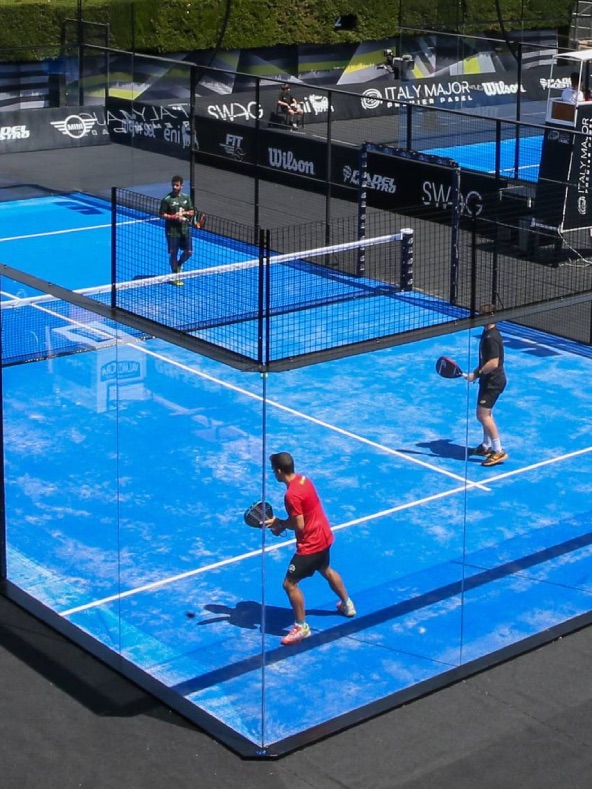
Last season clearly confirmed this. The world’s top pair — Arturo Coello and Agustín Tapia — won 13 of the 21 tournaments played. Of the eight events where they failed to lift the trophy, seven were held on slow courts. The correlation is obvious: on fast surfaces, this attacking pair is virtually untouchable. For this reason, information about the expected court speed becomes the key to understanding the future balance of power.
However, it would be a mistake to view a fast court as an automatic guarantee of victory for Coello and Tapia. A whole generation of rapidly improving attacking players — Leo Augsburger, Momo González, Javi Leal — is already capable of challenging the favourites precisely in dynamic conditions. Ale Galán should not be overlooked either: although last season, together with Fede Chingotto, he was more consistent on slow courts, his attacking potential remains among the highest on the tour.
It is important to remember that “court speed” is a complex concept. It is influenced by the type of surface, altitude, temperature, humidity, and the balls used. As a rule, organizers do not publish official data, but based on the tournament’s location and experience from previous years, it is often possible to predict with a high degree of accuracy whether a court will be more likely fast or slow. Even so, surprises can occur — a clear example being Kuwait, where last season the centre court was artificially slowed down, while the others remained fast.
The start of the 2026 season promises to be particularly demanding for the favourites: 4 of the first 6 tournaments will be played on slow courts, which objectively increases the likelihood of unexpected results.
Preliminary classification of Premier Padel 2026 tournaments by court speed
February
-
Riyadh Season Premier Padel — fast (P1), February 9–14
-
Gijón Premier Padel — slow (P2), February 2–8
March
-
Cancún Premier Padel — slow (P2), March 16–22
-
Miami Premier Padel — slow (P1), March 23–29
April
-
Qatar Doha Premier Padel — fast (Major), April 6–11
-
Newgiza Premier Padel — slow (P2), April 13–18
-
Brussels Premier Padel — fast (P2), April 20–26
May
-
Buenos Aires Premier Padel — slow (P1), May 11–17
-
Asunción Premier Padel — slow (P1), May 18–24
June
-
Italy Premier Padel — slow (Major), June 1–7
-
Valencia Premier Padel — fast (P1), June 8–14
-
Valladolid Premier Padel — fast (P2), June 22–28
-
Bordeaux Premier Padel — fast (P2), June 29 – July 5
July
-
Málaga Premier Padel — slow (P1), July 13–19
-
Pretoria Premier Padel — no data (P2), July 27 – August 5
August
-
London Premier Padel — no data (P1), August 3–9
-
Mediterranean Games — no data, August 24–30
-
Madrid Premier Padel — fast (P1), August 31 – September 6
September
-
Paris Premier Padel — slow (Major), September 7–13
-
Europe Premier Padel — no data (P2), September 14–20
-
Rotterdam Premier Padel — fast (P2), September 28 – October 4
October
-
Germany Premier Padel — no data (P2), October 5–11
-
Milano Premier Padel — slow (P1), October 12–18
-
Kuwait Premier Padel — slow (P1), October 26–31
November
-
FIP World Cup — no data, November 1–7
-
Dubai Premier Padel — fast (P1), November 9–15
-
Mexico Premier Padel — slow (Major), November 23–29
December
-
Barcelona Premier Padel Finals — slow, December 7–13