
23 de noviembre de 2025
Padel is built around a key element: transitioning from defense to offense by moving up to the net. Whoever holds the net has the initiative.
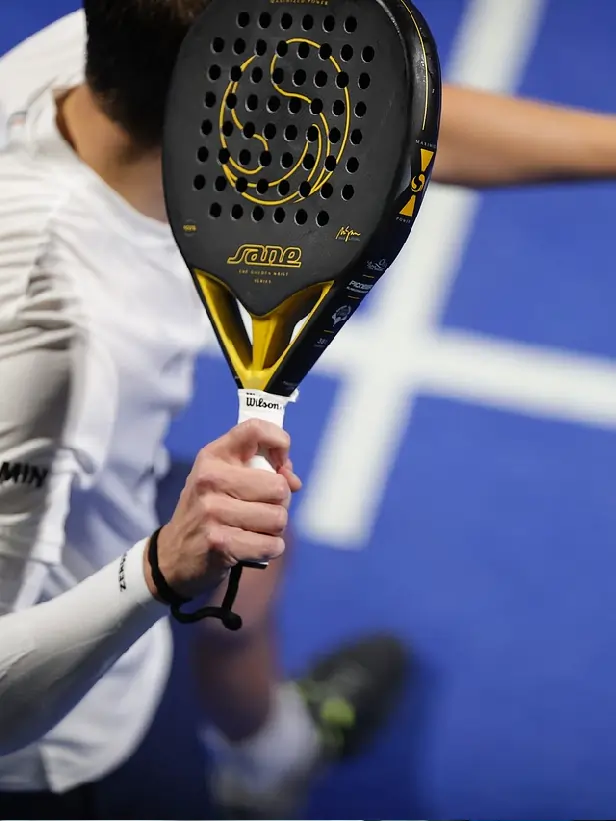
Since the serve in padel (unlike in tennis) is limited by height, its speed is also limited. Under these constraints, an ace may occur as a lucky bonus, but it is not the main objective. The serve gives the advantage of taking the attacking position at the net, not of winning the point outright.
Main goal:
Serve in a way that allows you to reach the net in time and force the opponent to return the ball under pressure.
Importance of the First Serve
If the first serve is missed, the second must be more reliable: lower speed and higher bounce to avoid losing the point through a double fault. The opponent may use an easy ball to immediately counterattack with a lob. As a result, you lose the dominant net position that the serve gave you.
Statistics support an unwritten rule: the first serve (uncomfortable) is usually returned low, and the second serve (easier) high, allowing the opponent to push you away from the net.
Thus, by missing the first serve, you almost guarantee the loss of your net advantage.
Difference Between Returning High and Low
Beginners may wonder: is playing high really more difficult than playing low? The correct statement is that playing well above the head is much harder than playing low. A poor lob either goes out or lands perfectly for the opponent to smash. Therefore, lobs should only be used on easy balls, without unnecessary risk, when you fully control their trajectory.
Serve Zones
Three Serve Zones
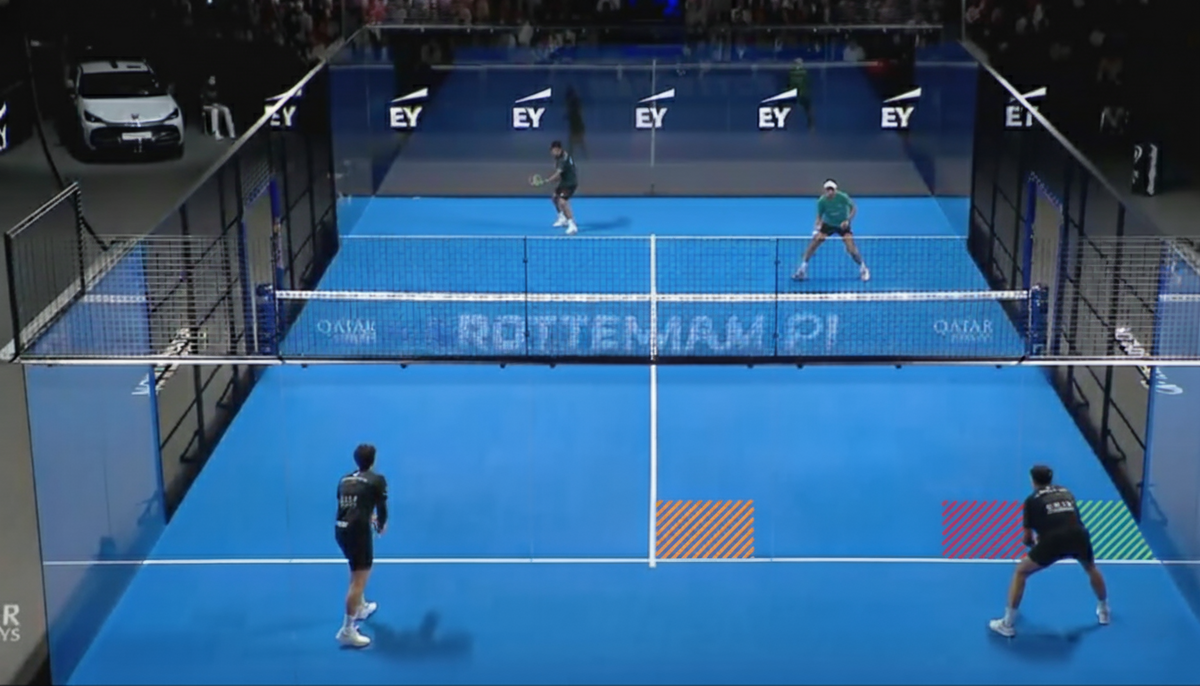
1. Corner with Glass Bounce (Green Zone)
This is the most popular and universal serve. It has the longest trajectory and gives you enough time to comfortably move up to the net. It also creates difficulties due to the bounce: the ball may have spin, the glass may be wet, and the bounce always adds unpredictability.
Use this serve when you notice that the opponent has moved closer to the center from their basic receiving position (intersection of the first two columns).
The ideal trajectory is for the ball to touch the glass near the first column (two meters from the corner), making it hard to play it before the glass and forcing the receiver to move deeper after the bounce.
2. Serve to the “T” (Central Intersection – Orange Zone)
This serve is also very uncomfortable. It is usually hit to force the opponent to return high but with poor control, allowing you to attack immediately with a smash. It can be executed with side spin so that the ball moves away from the receiver. It is especially effective when directed to the opponent’s weaker hand. Choose this serve when the opponent has moved closer to the glass.
3. Serve to the Opponent’s Feet (Purple Zone)
The most underrated serve among amateurs, yet one that should be in every player’s arsenal. Although it seems simple, it is very uncomfortable because it forces the opponent to adjust their position to receive properly. It is often used as a second serve, keeping the ball away from two of the three possible outs. It is very reliable and can also be used as a first serve, especially when the receiver is positioned higher near the return line. A deep serve to the feet will almost certainly cause trouble.
Which Serve to Choose?
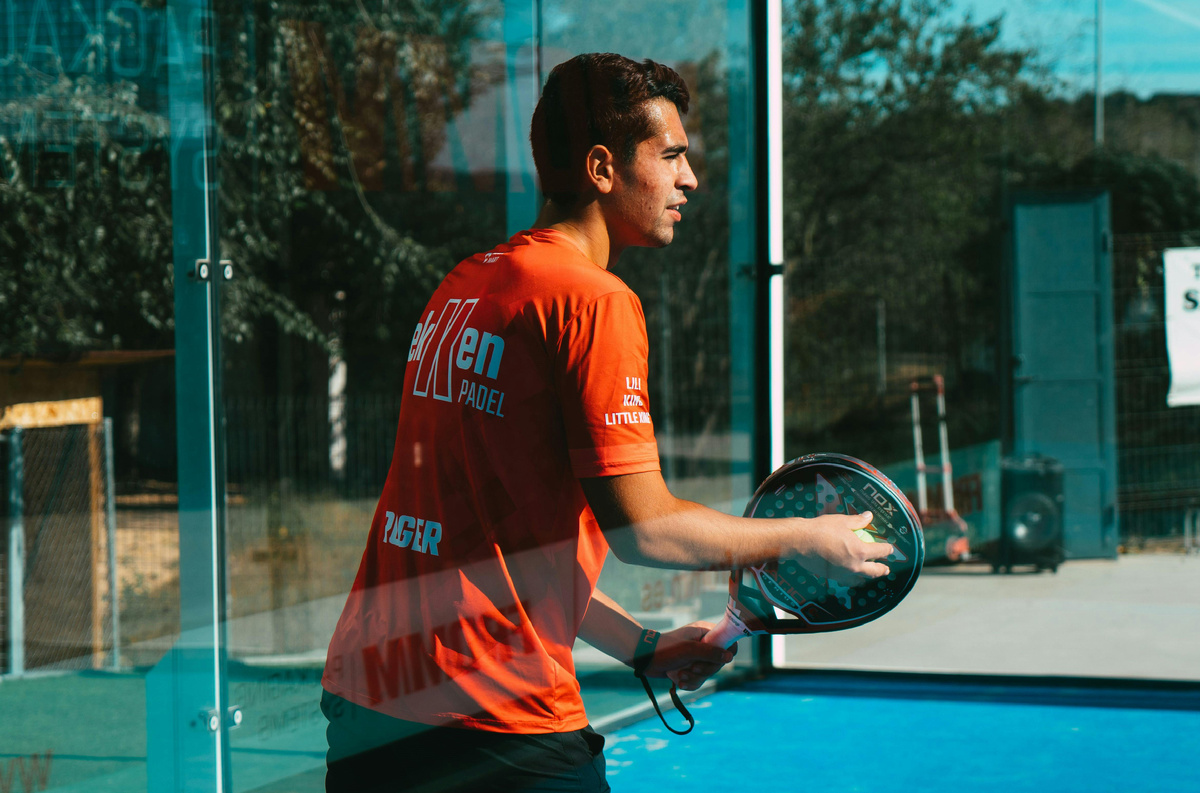
Always remember the goal and the importance of the first serve. In any case, prioritize speed control. The serve’s speed must not exceed your ability to reach the net and take a stable position.
Consider the following:
Serve Direction
If an Australian formation appears on court:
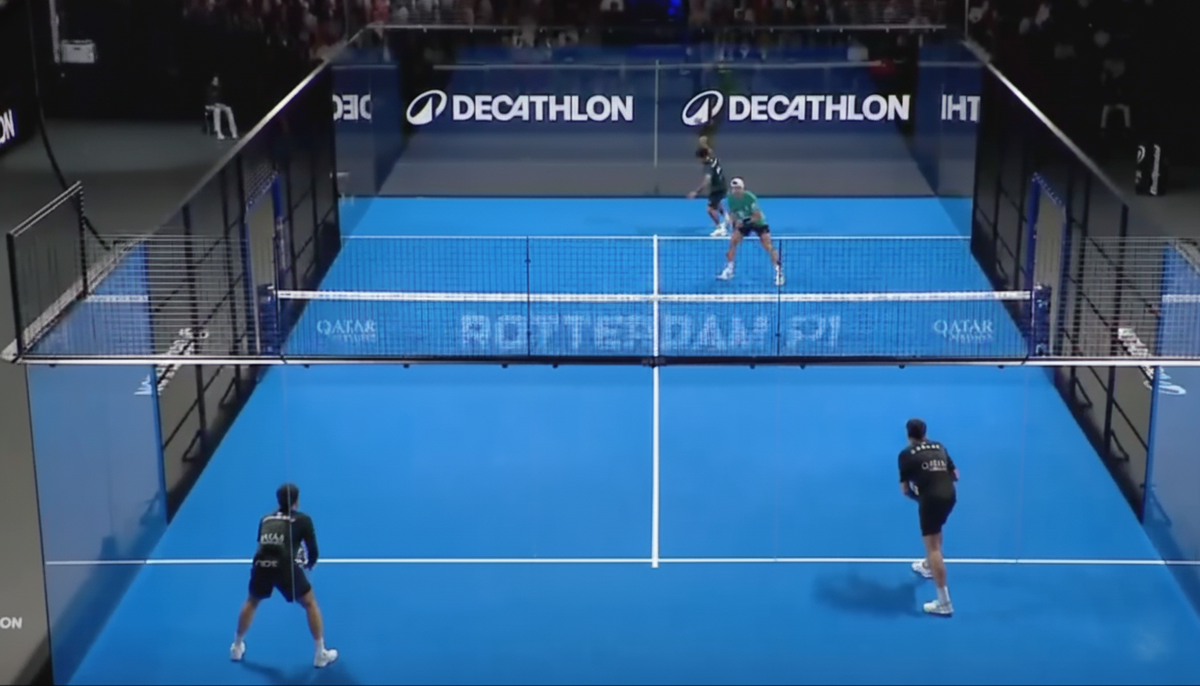
If you are the right-side player serving from the left side, note that you leave a large open area. Therefore, be careful with serves to the corner. If you are not sure the serve will be deep enough to prevent the opponent from hitting the ball before the glass, choose a center or body serve. If the serve is fast but not deep enough, the opponent will be able to hit before the glass, and you may fail to cover the parallel line and lose the point.
The same applies when serving from the right for a left-side player.
Player Positioning
The basic receiving position is at the intersection of two columns.
-
If the receiver moves closer to the side glass — serve to the center.
-
If they move toward the center — serve to the corner.
-
If they move higher toward the return line — serve to the feet.
Keep in mind that an experienced player may position themselves deliberately to provoke a specific serve. This is a psychological aspect of the game.
You should also pay attention to the receiver’s partner: when the serve is being received, they should move closer to the center. If this doesn’t happen and they “get stuck” in their corner, the center becomes too open. This suggests you should serve to the corner so you can later attack the center from the net — the opponents will have a hard time reaching it.
Result of the Previous Serve
If your go-to serve allows the opponent to comfortably hit a lob and take away the net, try another option in the next point against the same receiver.
Conversely, if a serve worked well and clearly caused trouble, it makes sense to repeat it to increase pressure.
Left-handed / Right-handed Opponent
If the opponent is left-handed, serving to the glass on their uncomfortable side is usually the best choice.
Tactics
As players improve, the serve selection may depend on the chosen tactic. Players think one step ahead: do they want to provoke a high ball or a shot in a specific direction?
Condition of the Glass
If you play on a rainy day or early in the morning after a cold night, the ball will “slide” down the glass. In such cases, it makes sense to serve more often toward the glass.
Surprise Factor
None of these factors are a secret. The receiver also analyzes and anticipates. Surprise them! But choose the right moment. If you are playing a tiebreak, reliability may be the better option.
Summary
The choice of serve depends on many factors. During the match, you must evaluate them collectively and choose the right moment for a “surprise.”
Choose your serve based on:
-
Your own preferences (everyone has a serve more stable than others).
-
Serve direction and formation.
-
Opponents’ positioning (if they have moved from the optimal intersection of two columns toward the glass or the center).
-
Chosen tactics.
-
Court conditions.