
3 de abril de 2026
Padel is the fastest-growing sport, and this applies not only to the number of players and tournaments, but also to the debates surrounding its rules.
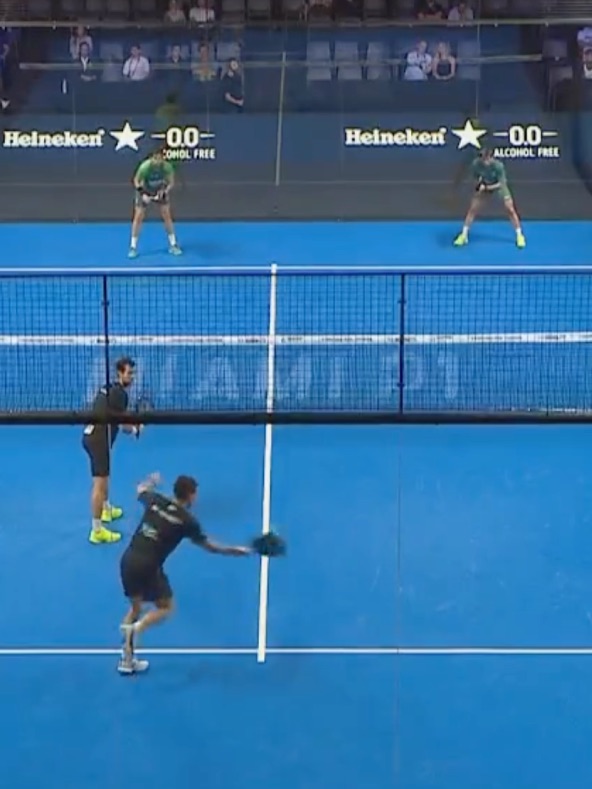
At the beginning of the year, the FIP, the International Padel Federation, introduced changes to the serving rules—and there was a clear rationale behind them. Under the old rules, the server had to ensure that, at the moment of contact, the ball was behind the service line and the center line. However, as technique evolved, many players began serving with a slight angle, gaining two advantages. First, after the bounce, the ball would end up slightly farther from the player, making it easier to strike. Second, at the moment of contact with the racket, the ball had already crossed the restricted lines—that is, it was slightly closer to the opponent’s service box, providing a small but real advantage.
This is exactly what the federation addressed. Hitting the ball at an angle off the court is still allowed, but now, at the moment of contact with the racket, it must not have crossed the designated service or center lines.
The serve is the most practiced shot in padel. Players repeat the same motion thousands of times, refining technique, precision, and consistency—key elements at the start of every point. As a result, some players had to adjust a deeply ingrained part of their game, and, as practice has shown, not everyone has managed to do so. Hence the new questions.
Let’s examine the situation through the example of Martín Di Nenno, one of the most experienced and technically skilled players on the tour.
In the quarterfinals of the Premier Padel tournament in Miami, the match between the pairs Yanguas/Stupaczuk and Momo/Di Nenno was extremely tense. With the score at 6–5 in favor of Momo and Di Nenno, Martín stepped up to serve for the set, but the game dragged on. After several deuces, the scoreboard again showed advantage for Martín. He missed his first serve, and on the second, Mike Yanguas raised his hands and asked the umpire to review the serve on video.
The replay confirmed a violation under the new rules, and the match went to a tie-break, which—along with the second set—was won by Yanguas and Stupaczuk.
On the one hand, rules are rules. On the other, Yanguas used this minor error to his advantage. And here lies the key nuance. Martín executes almost all his serves on the left side right at the edge of what is allowed, and the ball often crosses the line. His first serve, which went out, was also technically illegal, but Yanguas deliberately chose not to call it, waiting instead for the second, decisive error.
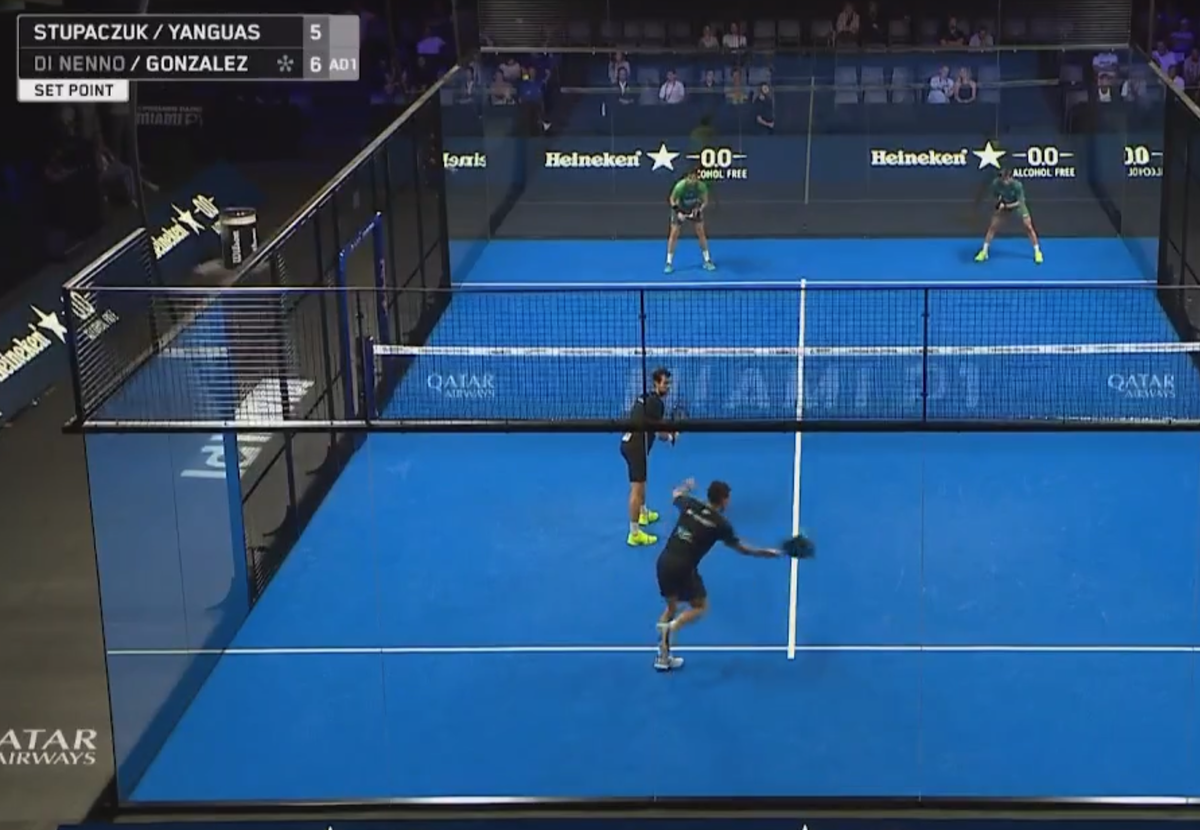
Consider this: at the elite level, double faults are extremely rare. Players refine their second serve to such a degree that they almost never give away free points. Was Martín trying to gain an extra advantage with this technique? Unlikely. Was Mike waiting for the right moment to claim the point? Very likely. From a rules standpoint, Mike was correct. From an ethical and sporting perspective, the question remains open.
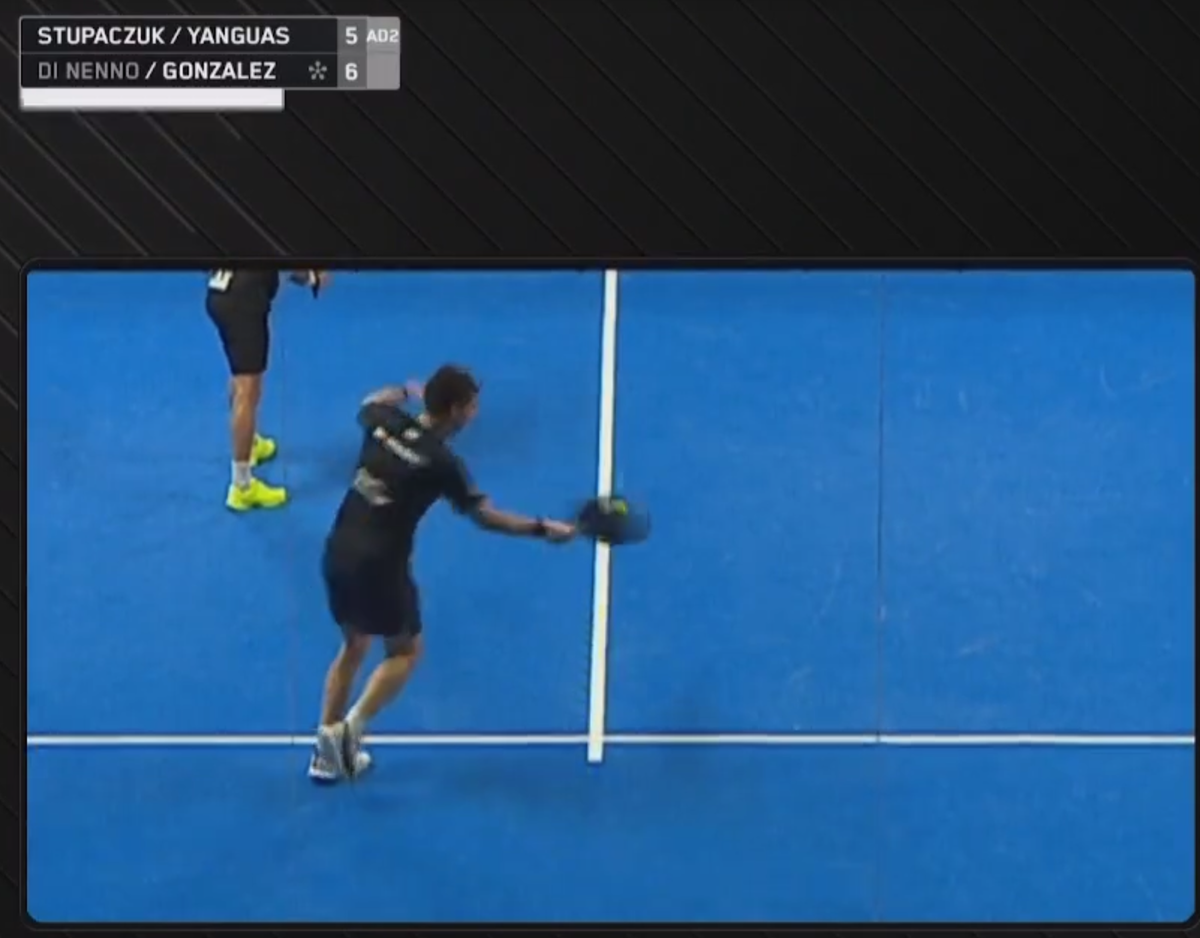
The problem is that this situation is not unique, and it is further complicated by the fact that the chair umpire cannot technically see the exact projection of the lines. A violation can only be determined through video review—if a player requests it. But video replay is available only at Premier-level tournaments. At other FIP events, such a system does not exist, meaning unclear violations go unresolved. The rule formally exists, but in practice, there is no effective way to enforce it.
A week later, Martín and Momo competed at the FIP Gold event in Kazakhstan, where in the first round they faced Pavel Karpushkin and his Spanish partner Miguel González. Throughout the match, Martín continued to serve with his usual trajectory, as confirmed by one of the still frames.
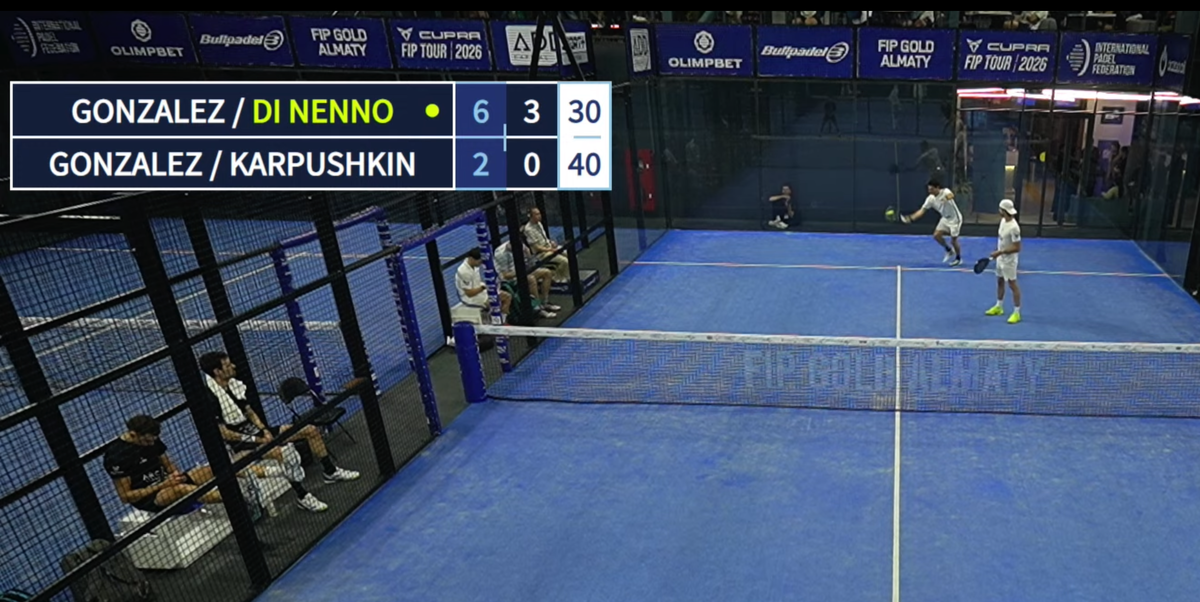
Was this an inability to adjust after the high-profile incident in Miami, or an understanding that FIP tournaments lack video review—and therefore allow him to continue serving as usual without fear of penalty?
The issue is that there is no obvious solution. It is unlikely that organizers will follow tennis by introducing additional officials dedicated specifically to service lines. Video review systems also require significant investment. And even if implemented, how would they affect the rhythm of the match? Would constant review requests disrupt the flow of play? And have the new rules created a situation where episodes like the one involving Mike Yanguas become inevitable?